
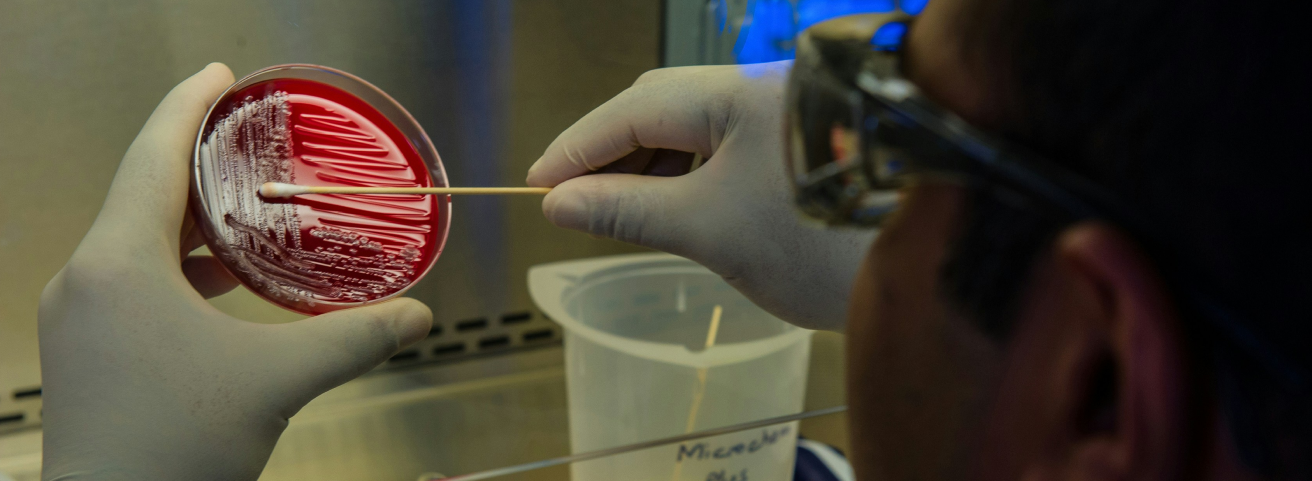
Alternative and rapid microbiological methods, from solid-phase cytometry to continuous monitoring
For decades, the microbiologist's relationship with contamination has been retrospective. A swab is taken, a plate is incubated for five to seven days, and only then — long after the event — does anyone know whether a surface, an operator, or a batch was contaminated. By the time the result lands, the product may be released, the room may have been cleaned a dozen times, and the contamination source may be long gone. Alternative and rapid microbiological methods (AMMs, also called RMMs) exist to break that delay, and the best of them convert microbiology from a backward-looking audit into a real-time control.
Why the traditional baseline is the problem
Conventional culture-based enumeration and detection methods carry a consistent set of limitations that no amount of operator skill fully overcomes. Recovery is slow — three to seven days on average — which delays confirmation of microbiological safety and lengthens the time to resolve any contamination event. Sensitivity is limited, with a real risk of underestimating stressed organisms and spore-formers. And the results are manual and subjective, demanding significant labour and personnel.
Set those limitations against a modern target operating model and the gap is stark. Where traditional environmental monitoring raises an alert in five to seven days, a real-time method raises it in under an hour. Where deviation detection is delayed and retrospective, it becomes immediate. Where trending is manual and periodic, it becomes automated and continuous. Where an investigation often begins only after release, it can begin the same day as the event. The shift is not incremental; it changes when and how a quality organization can act.
A field of complementary technologies, not a single winner
A frequent misconception is that one rapid technology will replace culture across the board. In practice, the AMM landscape is a toolkit of complementary approaches, each with a distinct detection basis, and the skill lies in matching technology to purpose.
Growth-based CO₂ detection keeps the familiar logic of culture but instruments the readout. Organisms grow in liquid media within a closed container that traps the CO₂ they produce; the gas reacts with an indicator at a sensor, an LED excites the resulting fluorescent material, and a photodetector reads it. Its strengths are practical: selective media bottles can target specified organisms, it is a walk-away system, and it is well suited to rapid sterility testing. Its detection rate correlates with the starting concentration of organism — a double-edged property, since a low initial load means a delayed signal — and the closed, CO₂-trapping bottle is not an ideal environment for strict aerobes.
ATP bioluminescence detects the energy currency of living cells. ATP, a direct marker of viability, is extracted from microorganisms and measured via the luciferin–luciferase enzyme system, which emits light in proportion to the ATP present. Because non-viable cells lose their ATP rapidly, the method is highly specific for actively growing organisms — and it is fast and simple enough for surface cleanliness and bioburden checks, typically at a detection limit on the order of ≤10 CFU. Its constraint is that fluorescing sample components (charcoal, for instance) can interfere, which has direct implications for how controls must be formulated.
Nucleic-acid amplification (PCR/qPCR) offers the highest sensitivity and specificity, detecting unique DNA or RNA sequences within hours and working even at very low sample volumes. But for sterility-relevant work it carries serious caveats: standard PCR cannot distinguish live from dead cells (mitigated by targeting RNA or using viability dyes), small amplicons may lack the genetic variation for species-level identification, and without a pre-enrichment step there is no live isolate available for antimicrobial susceptibility testing or investigation. It is powerful, but its limitations must be designed around rather than ignored.
Biofluorescent particle counters (BFPCs) abandon growth entirely. They use scattered light to enumerate particles and intrinsic autofluorescence to classify them as biologic or non-biologic, reporting both particle counts and Auto-Fluorescent Units (AFU). As a non-growth method for water and air, their advantage is continuous, real-time monitoring that gives timely indication of adverse trends, reduces the need for operators in critical environments, and — through AFU — accounts for viable-but-non-culturable (VBNC) organisms that culture misses. The trade-off is that they do not identify the biologics they detect, so a second method is needed for identification, and counts can be skewed where materials autofluoresce.
Solid-phase cytometry meets artificial intelligence
The most striking recent advance combines solid-phase cytometry with AI to deliver something culture cannot: detection of a single live microorganism in a filterable sample, without enrichment or growth, in roughly fifteen minutes.
The principle builds on filtration capture. The sample is aspirated and filtered onto a track-etched membrane of calibrated 0.4 µm porosity — black, to reduce fluorescence interference — retaining the organisms. A sequential, multi-target labelling step then marks nucleic acids, transcriptomic and mitochondrial activity, and structural elements, discriminating biotic from abiotic material and, crucially, live from dead, so that only viable organisms are reported. Multi-sensor fluorescence detection collects signals over time, and an artificial-intelligence layer — trained on tens of millions of events and analyzing more than a hundred criteria — eliminates background noise and renders the live/dead call without operator interpretation.
The defining attribute is objectivity . The result is enumerated automatically, an analysis certificate is generated, and no human reads or interprets it; data is traceable (RFID-tracked reagents and consumables), shelf life is managed automatically, and the system is built for 21 CFR Part 11 compliance with export to USB or LIMS. Because it requires no growth, it recovers VBNC organisms that conventional culture cannot. Validation work against the compendial method (per EP 5.1.6) has shown agreement across the standard pharmacopoeial panel — B. subtilis , P. aeruginosa , S. aureus , C. sporogenes , C. albicans , A. brasiliensis — with linearity across roughly 5 to 1,200 organisms (R² > 0.95), detection limits within the 95% confidence interval of the compendial method, robustness to deliberate protocol variation, and no false positives or negatives from the presence of dead cells. Feasibility studies on demanding modern matrices — therapeutic monoclonal antibodies, LNP-mRNA drug products, and cellular samples — have shown recovery rates broadly within acceptable accuracy limits after appropriate sample preparation, with times-to-result under 25–60 minutes depending on volume and matrix. The honest edges are visible too: certain matrices (a high cell-density CAR-T background, for example) can suppress recovery of specific strains, which is exactly the kind of matrix-specific effect that product-specific qualification is designed to surface.
The regulatory status is catching up to the science
These methods are not operating ahead of the rules. EP chapter 5.1.6 describes alternative methods including solid-phase cytometry and is being revised to facilitate implementation; USP <1223> governs validation of alternative methods and <1071> addresses rapid tests for sterile short-life products, with a dedicated solid-phase-cytometry chapter (USP <74>) progressing toward compendial status; and the Japanese Pharmacopoeia recognizes rapid counting of microorganisms by fluorescent labelling. The FDA, EMA, and USP all encourage AMMs when they are validated and scientifically justified, and EU GMP Annex 1 (2022) goes further by calling for the integration of rapid and alternative methods into a site's Contamination Control Strategy. As one practitioner put it, regulators do not expect perfection — they expect a risk-based justification of fitness for purpose.
The honest constraints — and why controls matter
Maturity means naming the limits. Solid-phase methods are restricted to filterable samples. Growth-based methods inherit culture's blind spots. BFPCs identify nothing. PCR struggles with viability. And every rapid method depends on controls that genuinely challenge the system and its reagents: no fluorescing components such as charcoal in ATP or fluorescence-based assays; liquid formats for flow cytometry; and control levels low enough to validate limits of detection and quantitation — many AMMs detect at <50 CFU and some at <1 CFU after enrichment, a level at which no commercial control yet exists. Choosing and formulating the right control organism is not a footnote to AMM validation; it is part of its foundation.
Conclusion
Rapid and alternative microbiological methods turn microbiology from a retrospective record into a real-time control system. ATP bioluminescence, growth-based CO₂ detection, nucleic-acid amplification, biofluorescent particle counting, and AI-enabled solid-phase cytometry each occupy a distinct niche, and the discipline's task is not to crown one but to deploy each where its detection basis fits the matrix, the risk, and the intended use. The regulators support the move; the technologies are validated and in service. What remains is the harder work — selecting correctly, validating rigorously against the right controls, and embedding the result into a contamination control strategy that finally lets a quality organization see contamination as it happens rather than after the fact.
References